Do You Need to Double Cleanse? An Esthetician's Answer
Short answer: Do you need to double cleanse? Not every night. Double cleansing, an oil-based cleanser followed by a water-based one, earns its place on nights you wore makeup, water-resistant sunscreen or a lot of oil. On a bare-faced night, one gentle cleanse is enough. A cleansing balm that turns milky with water and rinses clean can be your only cleanser most evenings.
Key takeaways
- Double cleansing is optional. It is a technique for removing makeup and sunscreen, not a step every skin needs every night.
- Match the cleanse to the day. Makeup or heavy sunscreen: two cleanses. Bare skin and a light moisturizer: one.
- A good balm can work alone. If it emulsifies into a milk and rinses with no film, a single balm cleanse is a complete cleanse.
- Mornings rarely need it. Water or one gentle cleanse, then sunscreen, is enough for most people.
- Tightness is a signal. Skin that feels tight, stings or looks red after washing is being over-cleansed, whatever the method.
What is double cleansing, and where did it come from?
Double cleansing means washing your face twice, back to back. The first cleanse uses something oil-based, usually a cleansing balm or a cleansing oil. Oil dissolves oil, so it loosens long-wear makeup, sunscreen filters and the sebum your skin makes over the day. The second cleanse uses a gentle water-based cleanser, such as a cream, gel or low-foam wash, to lift whatever the first step left behind.
The habit became popular through Korean skincare routines, and it spread because it solves a real problem: modern sunscreens and long-wear makeup are made to stay put, and a single splash of foaming wash does not always shift them. Dermatologist Dr. Jane Yoo works through the same question in her guide to whether you need to double cleanse, and the theme is the one I see in the treatment room: the second step earns its place on makeup and sunscreen days.
What double cleansing is not: a deeper or more virtuous way to wash. The American Academy of Dermatology's face washing advice is to use a gentle, non-abrasive cleanser, lukewarm water and your fingertips, and to wash twice a day and after sweating. Nothing in that advice says more washing is better. Clean skin is the goal; stripped skin is the thing to avoid.
Should I be double cleansing every night? Or should I only use the balm on days I wear makeup?
This is the question I hear most from people who have just bought their first balm, and the honest answer is that it depends on what is on your skin at the end of the day, not on the calendar. Here is how I would decide, night by night.
| Your evening | Cleanse once or twice? | Why |
|---|---|---|
| Full makeup, long-wear foundation or mascara | Twice: balm, then a gentle cleanser | Long-wear formulas are made to resist water. The balm loosens them, and the second cleanse lifts the residue. |
| Water-resistant or mineral sunscreen, no makeup | Usually twice | Water-resistant filters and mineral sunscreens cling. A balm first makes the second cleanse quicker and gentler. |
| Light daily sunscreen, no makeup | Once is usually enough | A balm that turns milky and rinses clean removes a light sunscreen in one pass for most people. |
| Bare skin, a day at home | Once | There is only the day's oil and a little moisturizer to remove. One gentle cleanse does it. |
| A sweaty workout or a very oily day | Once, or twice if skin still feels coated | Rinse sweat off soon after exercise. Add a second cleanse only if skin still feels oily after the first. |
| Skin that is tight, red or stinging | Once, gently, and look at what you are using | Those are signs of too much cleansing. Fewer steps and cooler water usually help more than another product. |
So yes, using the balm on its own on bare-faced days, and double cleansing on makeup days, is a perfectly good routine. It is the one I recommend most often.
Can I use an oil cleanser or cleansing balm without "double" cleansing?
Yes, as long as it rinses clean. The test is simple: after you rinse, your skin should feel soft and comfortable, with no greasy film and no squeak. A well-made balm contains emulsifiers that turn it into a milk the moment you add water, so it rinses away instead of sitting on the skin. If yours leaves a film, either massage it with water a little longer before rinsing, or follow it with a quick second cleanse.
How to do a single balm cleanse properly:
- Start with dry hands and a dry face. Water first stops a balm from grabbing makeup.
- Scoop about a dime-size amount and massage it over your face for 30 to 60 seconds, a little longer over eye makeup.
- Wet your fingertips with warm water and keep massaging until the balm turns milky.
- Rinse with lukewarm water and pat dry with a clean towel.
Do I need to double cleanse in the morning?
For most people, no. While you sleep your skin makes a little oil and absorbs your night products, and that is about it. A splash of lukewarm water or one gentle cleanse is enough. If your skin is very oily, a single gentle cleanse in the morning helps it feel fresh. If it is dry, water alone may be all it wants. Whatever you choose, finish with sunscreen: the AAD's sunscreen guidance is a broad-spectrum SPF 30 or higher on all exposed skin, every day.
Do I need to double cleanse if I have dry skin?
Not necessarily, and often not. Dry skin makes less oil, so there is less to dissolve, and every extra wash takes a little more of the oil it does make. If you have dry skin and wear makeup, a balm followed by a creamy, low-foam cleanser is fine. On every other night, a balm on its own is usually kinder. If you are not sure whether your skin is dry or just short of water, my guide to dehydrated skin versus dry skin walks through the difference, and it changes which cleanser you want.
Do you have to double cleanse if you wear sunscreen?
It depends on the sunscreen. A light, everyday formula usually comes off with one balm cleanse that emulsifies well. Water-resistant sunscreens, sport formulas and mineral sunscreens with zinc oxide or titanium dioxide are made to stay on through sweat and water, so they are the case where two cleanses make the most sense. A quick check: after one cleanse, if your skin still feels slick or a cotton pad with toner picks up a white or beige tint, add the second cleanse that night. Please do not let a cleansing routine put you off sunscreen. Removing it is a small job; skipping it costs far more.
How do I tell which cleanse my skin actually needs?
Before you buy anything, spend a week paying attention after you wash. Your skin tells you quickly whether a routine suits it.
- It feels tight, looks shiny-red or stings when you apply serum: you are over-cleansing. Drop to one gentle cleanse and cooler water.
- It feels slick or coated an hour later: something is not rinsing. Emulsify longer, or add a second cleanse on makeup and sunscreen nights.
- Makeup shows up on your towel or pillowcase: the first cleanse is not finishing the job. Massage the balm a little longer before adding water.
- New small bumps after a routine change: change one thing at a time and give it two weeks before judging. The AAD's list of habits that can worsen acne includes scrubbing your skin.
- It feels comfortable and clean: whatever you are doing is working. Do not add steps for the sake of it.
Cleansing balm vs cleansing oil: which is better for the first cleanse?
Both work on the same principle, and both make a good first cleanse. The difference is texture and convenience. Micellar water is the third option people ask about, so I have included it.
| First cleanse | Texture | Best for | Worth knowing |
|---|---|---|---|
| Cleansing balm | Solid in the jar, melts as you massage | Makeup and sunscreen wearers, dry or sensitive skin, travel | Choose one that turns milky with water so it rinses clean. Use a clean spoon or dry fingers in the jar. |
| Cleansing oil | Liquid, spreads quickly | Large areas, people who like a fast cleanse | Easier to spill. Needs an emulsifier to rinse clean instead of leaving a film. |
| Micellar water | Water-thin, used on a cotton pad | Very light makeup, a quick cleanse when you have no sink | Wiping is more friction than rinsing. Many people follow it with a rinse or a second cleanse. |
If you have oily or acne-prone skin and you are nervous about putting oil on your face, my guide to cleansers for oily skin covers how a balm fits a routine for oily skin, and when a gel or foaming wash is the better second step.
Can double cleansing cause breakouts?
The method is rarely the culprit on its own. When someone tells me their skin broke out after they started double cleansing, the cause is usually one of four things: scrubbing too hard, very hot water, a first cleanse that does not rinse off fully, or simply too much washing. The fix is to keep both cleanses gentle, rinse well, and drop the second cleanse on nights that do not need it. If you have acne that is painful, cystic or not settling, that is a job for a board-certified dermatologist, not a new cleanser. The NIAMS overview of skin conditions is a good place to start reading.
What we make, and who it is for
I made Boho Cleansing Balm as the first step of our routine because I wanted a cleanser that removes the day without leaving skin tight. Everything in this section is about our own product. The research and guidance above is general and is not a claim about it.

Step 1, cleanse
A balm-to-milk cleanser that melts makeup and SPF on dry skin, then turns milky with water and rinses without leaving skin tight. Made with sunflower, olive and sweet almond oils, sea buckthorn fruit oil, manuka honey and castor oil. 2.11 oz (60 g). Rated 4.97 out of 5 across 78 reviews on the product page.
$39.99
Auto Refill: 20% off every order at $31.99, every 4, 8 or 12 weeks. Skip, change, or cancel anytime.
It works as a single cleanse on most nights and as the first cleanse on makeup nights. If you want a second step, any gentle, low-foam cleanser from our cleansers pairs with it.
A simple evening routine, with or without the second cleanse
- Cleanse. Boho Cleansing Balm on dry skin, emulsify with warm water, rinse. On makeup or heavy sunscreen nights, follow with a gentle water-based cleanser.
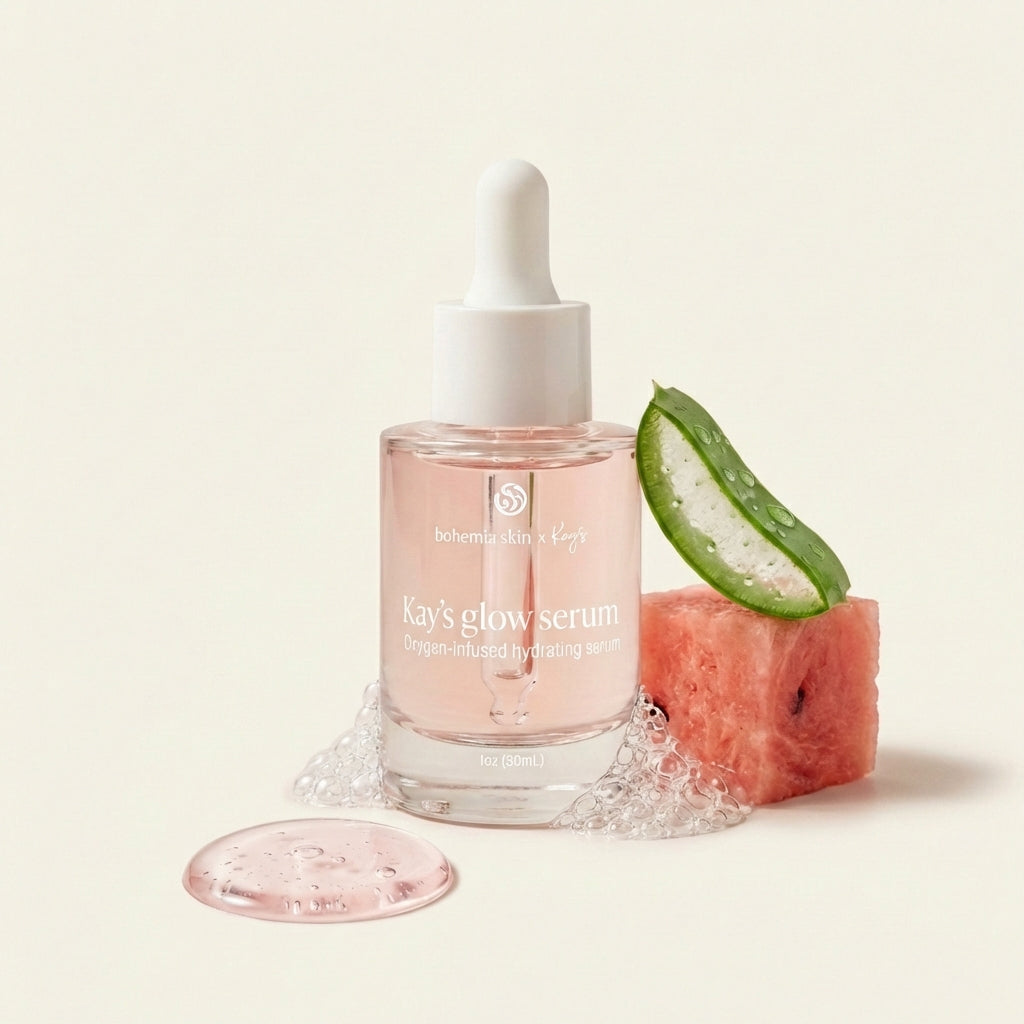
- Treat. Kay's Glow Oxygen Serum on clean, slightly damp skin.
- Moisturize. Infinite Aura Moisturizer to finish. Pump it onto the top of its own container, mix in your serum drops there, then press it in. It is lavender scented, not fragrance free.
Those three steps are The Bohemia Skin System. If you are not sure where to start, the skin quiz suggests a routine for your skin type, and my guide to layering order for sensitive skin explains why the order matters. For timing, I also wrote about whether to use a balm morning or night.
Frequently asked questions
What is double cleansing?
Double cleansing means washing your face twice in one sitting. The first cleanse uses an oil-based product, such as a cleansing balm or oil, to dissolve makeup, sunscreen and the oils your skin makes. The second uses a gentle water-based cleanser to rinse away what is left. It is a technique, not a product, and it is optional.
Is double cleansing necessary every night?
No. A second cleanse earns its place on nights you wore long-wear makeup, heavy or water-resistant sunscreen, or when your skin is very oily. On a bare-faced night, one gentle cleanse is enough for most people, followed by the best moisturizer for oily skin rather than no moisturizer at all. If your skin feels tight or looks red after washing, you are probably cleansing more than it needs.
Can a cleansing balm be used alone?
Yes. A balm that turns milky when you add water and rinses clean can be your only cleanser on most nights. Massage it onto dry skin, add warm water until it turns milky, then rinse with lukewarm water. If your skin feels comfortable and clean afterwards, with no greasy film, you do not need a second step.
Should you double cleanse in the morning?
Usually not. While you sleep your skin makes only a little oil and shed what it always sheds, so a splash of lukewarm water or one gentle cleanse is plenty. Save the double cleanse for the evening, when there is sunscreen and makeup to remove, and always finish your morning routine with sunscreen.
Is double cleansing good for dry or sensitive skin?
It can be, if both steps are gentle and you keep it to the nights that need it. Dry and sensitive skin does best with a balm first and a creamy, low-foam cleanser second, lukewarm water and a soft towel. Many people with dry skin find a balm alone is enough. Moisturize straight after, while skin is still slightly damp.
Can double cleansing cause breakouts?
The method itself is not the usual problem. Breakouts after starting a new cleansing routine more often come from scrubbing, washing too often, very hot water or a product that does not rinse cleanly. Change one thing at a time so you can tell what is helping. If breakouts are painful or not settling, see a board-certified dermatologist.
Cleansing balm or cleansing oil: which is better?
They do the same job. A balm is solid in the jar and melts as you massage it in, which makes it less messy and easier to travel with. An oil is liquid and spreads quickly over a large area. Pick the texture you will actually use, and choose one that turns milky with water so it rinses clean.
How long should you massage a cleansing balm?
About 30 to 60 seconds on dry skin is enough for most faces, a little longer over eye makeup or mineral sunscreen. Use light circles and let the balm do the work instead of pressing hard. Then add warm water, massage again until it turns milky, and rinse. Rubbing longer or harder does not make skin cleaner.