How to Tell If Your Skin Barrier Is Damaged (and What to Do)
Short answer: Your skin barrier is probably damaged if products that used to feel fine suddenly sting, your face feels tight within minutes of washing, and you see redness, rough patches or flaking that moisturizer does not settle. The usual causes are over-exfoliating, stacking too many actives, harsh cleansers, hot water and cold, dry air. The fix is subtraction: stop the acids and scrubs, then cleanse gently, moisturize and wear sunscreen until skin feels calm again.
Key takeaways
- Stinging from a product you have used for months is the clearest early sign that your barrier is stressed.
- Tightness, redness, flaking and a shiny but uncomfortable surface often show up together; one alone may just be dryness.
- Most damaged barriers are caused by doing too much: acids, retinoids, scrubs and foaming cleansers stacked in the same week.
- Recovery starts with subtraction. Pause every exfoliant, including serums that contain AHAs, until skin is comfortable again.
- A simple routine of a gentle cleanser, a moisturizer with ceramides and daily sunscreen is enough while skin settles.
- Pain, oozing, swelling, or a rash that keeps spreading needs a dermatologist, not a new product.
What is the skin barrier, in plain words?
The outermost layer of your skin works like a brick wall. The bricks are flattened skin cells, and the mortar between them is a mix of lipids: ceramides, cholesterol and fatty acids. Healthline's overview of the skin barrier describes this same structure, and the National Eczema Association explains why it matters: the wall keeps water in and keeps irritants out.
When the mortar wears thin, water escapes faster and the things you put on your face reach nerve endings they normally would not. That is why a stressed barrier feels both dry and touchy at the same time. In my treatment room this is the single most common thing I see in clients who are trying hard, buying good products and still feeling worse every week.
How can you tell if your skin barrier is damaged?
Look for a cluster of signs rather than one. Dryness on its own is common in winter and is not the same thing. A damaged barrier usually shows up as several of these at once:
| Sign | What it feels or looks like | What it usually tells you |
|---|---|---|
| Stinging or burning | A serum, toner or even moisturizer you have used for months suddenly stings on contact | The strongest sign. Ingredients are reaching skin that is not as protected as it was |
| Tightness after washing | Skin feels pulled within a few minutes of cleansing, before you apply anything | Your cleanser or water temperature is stripping more than skin can replace |
| Redness that lingers | Pink or flushed patches, often on the cheeks, around the nose or along the jaw | Skin is reacting to something. Pause new products and see whether it settles |
| Flaking or rough patches | Dry, papery spots that come back the day after you moisturize | Water is escaping faster than your moisturizer can hold it in |
| Shiny but uncomfortable | A tight, glassy surface that looks smooth and feels raw | Often over-exfoliation. Shine here is not the healthy kind |
| New bumps or breakouts | Small bumps appear while you are using more products, not fewer | Irritated skin can break out. Doing more usually makes it worse |
If you tick two or three of these, treat your barrier as stressed for the next couple of weeks. It costs you nothing to simplify, and it is the quickest way to find out.
What can damage your skin barrier?
Almost every damaged barrier I see has the same story: a routine that grew one product at a time. Each step made sense on its own. Together they were too much.
| Cause | Why it stresses the barrier | What to do instead |
|---|---|---|
| Over-exfoliating | Acids, scrubs, peel pads and cleansing brushes all remove surface cells. Used together or daily, they remove more than skin can rebuild | One exfoliant at a time, two or three nights a week at most, and none while skin is stinging |
| Stacking actives | Retinoids, AHAs, BHAs and strong vitamin C on the same night add up | Alternate nights, and introduce one new active at a time |
| Harsh or foaming cleansers | Strong surfactants can lift the lipids that hold the barrier together | A balm, milk or cream cleanser that leaves skin soft, not squeaky |
| Hot water and long showers | Heat softens and rinses away surface oils | Lukewarm water on your face, and keep it brief |
| Cold, dry air and indoor heating | Low humidity pulls water out of the skin faster | A richer moisturizer in winter, and a humidifier in the bedroom if you can |
| Sun without protection | UV exposure adds stress on top of everything else | Broad-spectrum SPF 30 or higher every morning, even in winter |
| Fragrance or a new product | Some skin reacts to specific ingredients, and stressed skin reacts more easily | Patch test anything new and add products one at a time |
A note on research. Lab and clinical studies on barrier lipids, such as this review of topical plant oils and skin barrier function in the International Journal of Molecular Sciences, look at individual ingredients under controlled conditions. That research explains why ceramides and certain oils are used in barrier-friendly products. It is not a test of any Bohemia Skin product, and I keep the two separate on purpose.
Is it a damaged barrier, dry skin, dehydration or a reaction?
These overlap, and the fix is different for each. A quick way to sort it out:
- Dry skin feels rough and flaky but does not sting. It makes too little oil, and a richer moisturizer usually solves it. My guide to dehydrated skin vs dry skin walks through the difference.
- Dehydrated skin can be oily and still feel tight, with fine lines that look more obvious by afternoon. It is short on water, not oil.
- A damaged barrier adds stinging, redness and sensitivity to products that used to be fine. It often follows a burst of new actives.
- A reaction or a skin condition may itch intensely, swell, blister, ooze or spread past where you applied a product. That is a reason to stop everything new and see a board-certified dermatologist, especially if you think it could be eczema, rosacea or an allergy.
If your redness comes and goes with heat, wine or spicy food, read my post on calming facial redness on sensitive skin too. Flushing and a damaged barrier often travel together.
What should you stop using when your skin barrier is damaged?
Stop first, then add. For the next two weeks, set these aside:
- Every exfoliating acid. That includes glycolic, lactic, mandelic, salicylic and any serum or toner that contains an AHA or BHA, even a gentle one.
- Retinoids. If yours is a prescription, ask your prescriber before pausing it rather than stopping on your own.
- Scrubs, peel pads and cleansing brushes.
- Foaming or squeaky cleansers.
- Anything new. No new products until skin is calm, so you can tell what is helping.
This is harder than it sounds, because it feels like doing nothing. It is not. Removing the stress is what gives skin room to settle.
What is a simple 3-step routine for a damaged skin barrier?
Three steps, morning and night. Nothing else until your skin feels comfortable for at least a week.
- Cleanse gently. Massage a balm or cream cleanser onto dry skin, add lukewarm water, rinse and pat dry. In the morning, a splash of water is often enough. If you wear makeup or SPF, my post on whether you need to double cleanse explains when one balm cleanse does the job.
- Moisturize while skin is slightly damp. Look for ceramides, hyaluronic acid, glycerin or beta glucan. These help skin hold water and support the barrier.
- Sunscreen every morning. Broad-spectrum SPF 30 or higher, applied generously. The American Academy of Dermatology's guide on how to apply sunscreen is worth a read; most people use about half the amount they need.
If you are not sure what order your products go in once you add them back, my skincare layering order for sensitive skin keeps it simple.
How long does a damaged skin barrier take to feel better?
There is no fixed clock, and anyone who promises one is guessing. Mild stress from a week of over-exfoliating often feels calmer within days of stopping. Skin that has been pushed hard for months takes longer. In my treatment room, I ask clients to give a simplified routine at least two weeks, and to wait until their skin has felt comfortable for a full week before adding anything back.
When you do, add one active at a time, two or three nights a week, and watch for stinging. If stinging comes back, you added too much too fast. Drop back and wait another week.
What do we make for a stressed barrier, and when should you wait?
Honest version first: you do not need to buy anything to start. Stopping the extra steps is free, and any gentle cleanser and plain moisturizer you already own will do while you work out what is going on. If you are looking for a routine to settle into, here is what I made and how I would use it on stressed skin.

Step 1, Cleanse
A balm-to-milk cleanser with sunflower, olive and sweet almond oils, sea buckthorn and manuka honey. It melts makeup and SPF and rinses clean without leaving skin tight, which is exactly what a stressed barrier needs. 2.11 oz (60 g).
$39.99
Auto Refill: 20% off every order at $31.99, every 4, 8 or 12 weeks. Skip, change, or cancel anytime.

Step 3, Seal
A lightweight cream with ceramides NP, EOP and AP, hyaluronic acid, beta glucan and a firming peptide. It helps skin hold moisture, helps support the skin barrier and helps calm the look of redness. Lightly scented with lavender and vanilla, so it is not fragrance free. 1.7 oz (50 mL).
$64.99
Auto Refill: 20% off every order at $51.99, every 8, 10 or 12 weeks. Skip, change, or cancel anytime.
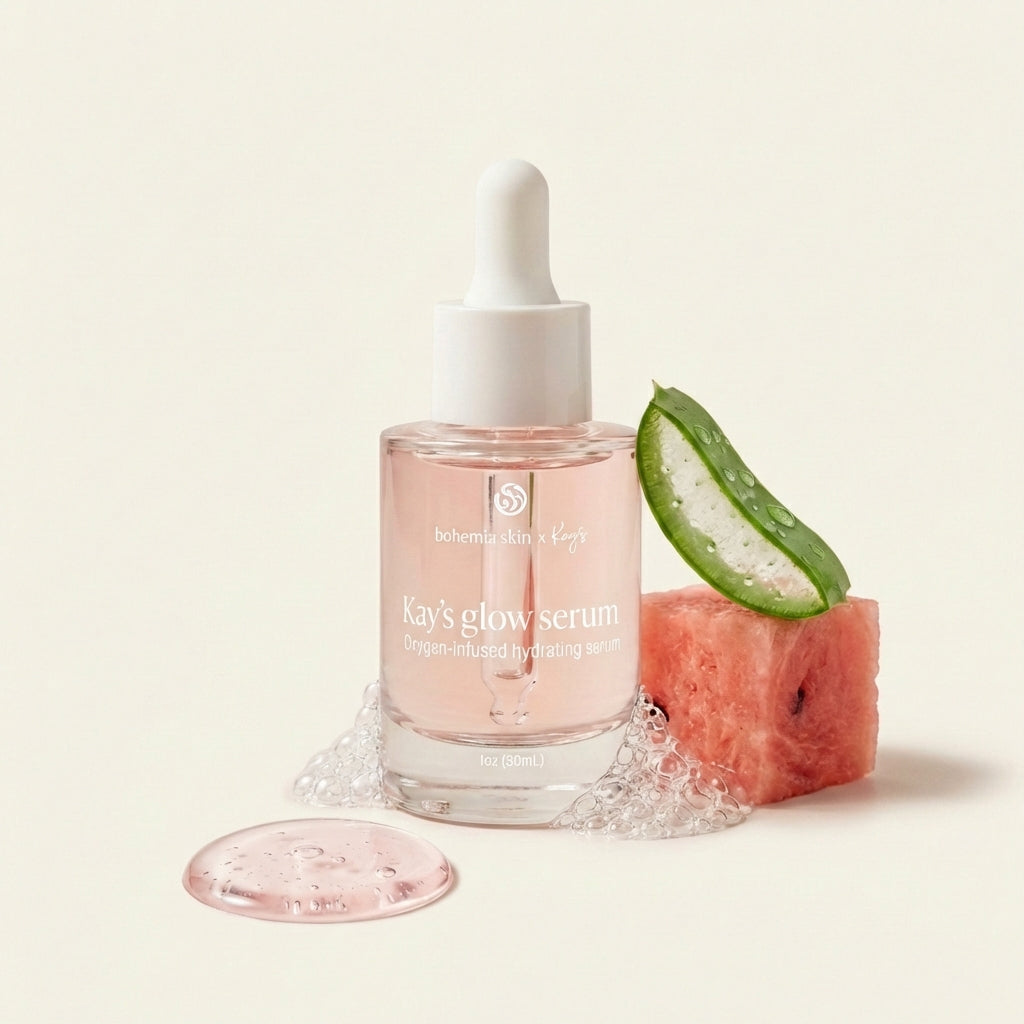
While your barrier is settling, those two are the whole routine, plus sunscreen in the morning. Once skin has felt comfortable for a week, you can add the middle step back. Kay's Glow Oxygen Serum, which I co-created with Kaylee Dudley, has vitamin C and a gentle trio of glycolic, lactic and malic acids. It smooths and brightens the look of skin, and it is an exfoliant, so it waits until the stinging has stopped. Start with two or three evenings a week. AHAs can increase sun sensitivity, so wear sunscreen every morning while you use it and for a week after you stop.
When you add it back, use it the way I do: pump Infinite Aura onto the top of its own container, add 3 to 5 drops of Kay's Glow Oxygen Serum there, mix them together on the container, then press the mix over your face and neck.

All three steps
Boho Cleansing Balm, Kay's Glow Oxygen Serum and Infinite Aura Moisturizer in one set. Bought separately they come to $184.97, so the set saves $16.98. Best for when your skin is calm again and you are ready for the full cleanse, treat and seal routine.
$167.99
Auto Refill: 20% off every order at $134.39, every 8, 10 or 12 weeks. Skip, change, or cancel anytime.
Browse everything we carry for reactive skin in our sensitive skin collection.
Frequently asked questions
How can you tell if your skin barrier is damaged?
The clearest sign is stinging from a product that used to feel fine. Other signs usually appear alongside it: tightness within minutes of washing, redness that lingers, flaky or rough patches that come back after moisturizing, and a shiny surface that feels raw. One sign alone may just be dryness. Two or three together suggest a stressed barrier, and simplifying your routine for two weeks is the quickest way to find out.
What can damage your skin barrier?
The most common causes are over-exfoliating, stacking actives such as retinoids and acids on the same nights, harsh foaming cleansers, hot water, cold dry air, indoor heating and unprotected sun. A new product your skin does not agree with can also trigger it. Most damaged barriers come from a routine that grew one product at a time until it was too much.
How long does it take for a damaged skin barrier to feel better?
It depends on how hard skin was pushed and for how long. Mild stress from a short burst of over-exfoliating often feels calmer within days of stopping. Longer-term stress takes more time. Give a simple routine of gentle cleanser, moisturizer and sunscreen at least two weeks, and wait until skin has felt comfortable for a week before adding actives back.
Should I stop using vitamin C or acids if my barrier is damaged?
Pause exfoliating acids, including AHA and BHA serums and toners, until stinging has stopped. Many vitamin C serums also contain acids or sit at a low pH, so set them aside too. When skin is calm, add one active back at a time, two or three nights a week. Anything with AHAs can increase sun sensitivity, so wear sunscreen every morning.
What ingredients help support the skin barrier?
Look for ceramides, cholesterol and fatty acids, which resemble the lipids already in your skin, plus humectants such as hyaluronic acid and glycerin that help skin hold water. Beta glucan and aloe can help skin feel calmer. Plain, simple formulas are usually easier on stressed skin than products with long lists of actives.
Can a damaged skin barrier cause breakouts?
It can make breakouts more likely, because irritated skin is more reactive and people often respond by adding more products. If small bumps appear while you are using more actives, simplify first. Breakouts that are painful, deep or leaving scars are worth showing to a board-certified dermatologist rather than treating with more products at home.
Is a damaged skin barrier the same as sensitive skin?
Not quite. Some people have skin that is sensitive by nature, and it reacts easily all the time. A damaged barrier is a temporary state that can happen to anyone, usually after doing too much. The two look similar, and a stressed barrier makes naturally sensitive skin even more reactive. If your skin calms down after two weeks of a simple routine, the barrier was the main issue.
Can I use Bohemia Skin products while pregnant?
Boho Cleansing Balm, Kay's Glow Oxygen Serum and Infinite Aura Moisturizer are all cleared for use during pregnancy. It is still a good idea to show any new routine to your own doctor or midwife. Kay's Glow Oxygen Serum contains AHAs, so pair it with daily sunscreen.
When should I see a dermatologist about my skin barrier?
See a board-certified dermatologist if your skin is cracked, bleeding, oozing, swollen or painful, if a rash spreads beyond where you applied a product, if itching keeps you awake, or if two to three weeks of a gentle routine has not helped. Those can point to eczema, an allergy, rosacea or an infection, which need a diagnosis rather than a new product.
Related reading
- Dehydrated skin vs dry skin: how to tell the difference
- Skincare layering order for sensitive skin
- How to calm facial redness on sensitive skin
- The 3-step sensitive skin routine
- A gentle skincare routine without harsh actives
- AM vs PM routine for sensitive skin
- How to clear clogged pores on sensitive skin
- Skin purging or breakout: how to tell the difference
- How to use vitamin C serum in a simple morning routine
- Mandelic acid for acne-prone and sensitive skin